Blood Pressure Regulation in Post–COVID POTS
Artur Fedorowski and colleagues are back with a case-controlled study that used 24-hour blood pressure monitoring on 100 patients with post-COVID-19 POTS.

New Research
Johansson, M. et al. Blood Pressure Regulation in Post–COVID POTS: Beyond Sinus Tachycardia. Hypertension 81, 2540–2548 (2024).
https://www.ahajournals.org/doi/10.1161/HYPERTENSIONAHA.124.23670
- Published on the 11th November 2024
- Case-control
- 100 patients, 100 controls (age and sex matched)
- Evidence for Pathology, Diagnosis
- Led by Artur Fedorowski
- Funded by Swedish, EU and Italian grants
Headlines
- Patients with post-COVID-19 POTS had significantly higher nighttime mean systolic* blood pressures (BPs) than controls (roughly 7% on average).
- Some POTS patients had higher mean nighttime BP than mean daytime BP, making them so-called "reverse dippers"; none of the controls showed this.
- Patients with post-COVID-19 POTS had more daytime systolic hypotensive episodes, with some episodes at <80mmHg, although the methodology did not provide sufficient information for assessing the robustness of this sampling/counting.
- POTS patients with this hypotensive tendency tended to be younger, and have lower heart rates, especially during the day.
This study adds robust evidence for abnormalities in circadian blood pressure variations in POTS. It also appears that POTS patients experience a relatively-high number of hypotensive episodes during the day, but the evidence for this is weaker. In any case, it is not just tachycardia.
* Systolic: Systolic pressure is generated directly as the heart beats, and is always higher than the diastolic pressure (between beats). Systolic hypotension is therefore the inability of the heart to generate pressure during the beat itself.
Review
An international, multi-disciplinary team led by Artur Fedorowski conducted a single-site trial of 24-hour blood pressure (BP) monitoring in 100 patients with post-COVID POTS and compared them to similar measurements taken from 100 age- and sex-matched controls from the Malmö Offspring Study (pre-2020). They reported on mean day- and night-time blood pressures, and counted the number of hypotensive episodes sampled during each patient's 24-hour monitoring period.
They found that POTS patients had higher mean nighttime systolic blood pressures, and counted more daytime systolic hypotensive episodes in the BP data from POTS patients.
The researchers noted that the patients with more hypotensive episodes tended to be younger, and have lower heart rates, especially during the day. This is interesting because POTS is defined as "tachycardia on standing without a fall in blood pressure," but hypotensive episodes are evidently possible in POTS and appear in this study to be more frequent in POTS than in healthy people.
The 24-hour BP monitoring used here, so-called ambulatory monitoring (ABPM), involves wearing a mobile blood-pressure cuff that inflates to take measurements at regular intervals. Two different systems were used to do this, but the details or differences between the systems were not discussed. Neither was it clear which were used in each cohort or for each patient. Critically, no comment was made on what duration each system typically takes, or actually took, when sampling the BP--this is fundamental for estimating the frequency of episodes each patient has from the observed episodes, or for comparing observed episodes between patients or patient groups.
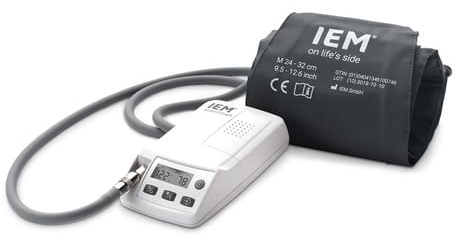
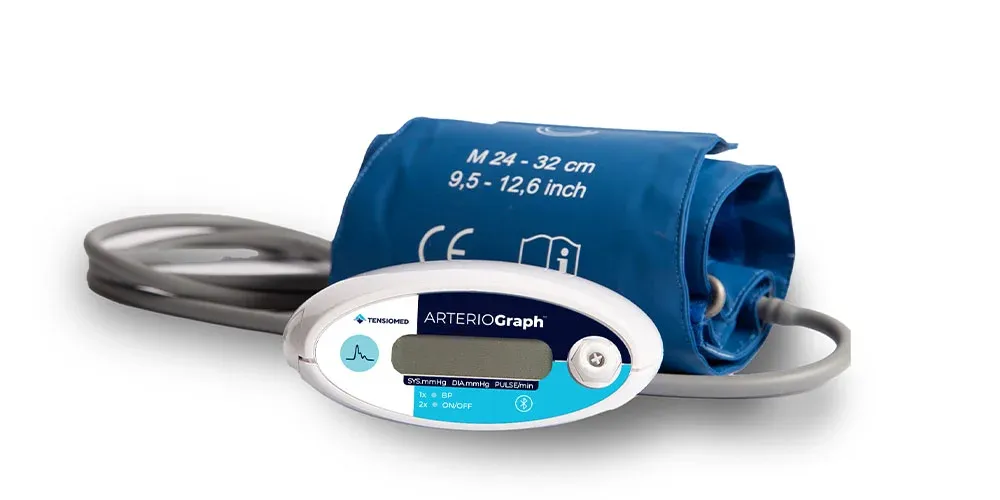
Event sampling issues aside, ABPM is a proven technology for comparing mean daytime and nighttime blood pressures, observing circadian variations and monitoring for hypo- or hyper-tension. Typically, in a healthy person, blood pressure falls at night to a low just before waking, and therefore the mean nighttime systolic BP is over 10% lower than during the day. This is called dipping.
The mean blood pressure results appear robust in this study, which clearly shows a significant increase in mean nighttime systolic blood pressure in POTS versus controls, independent of age and sex. Most of the POTS patients here are categorised as "non-dipping," or even "reverse-dipping" if their mean nighttime pressure is higher than during the day (9 of the POTS cohort, 0 of the controls). The authors speculate about the mechanism for this increase, mentioning the hyperadrenergic phenotype and high frequency of \( \alpha_1 \) adrenergic receptor autoantibody counts in POTS. These insights are not backed by corresponding data in this study, but as we say in the anglosphere, "the shoe fits."
This study must include details of how monitoring data was interpreted to arrive at hypotensive episode counts since they could be highly skewed by the sample durations and mechanisms of the monitoring systems. At present the only detail in the report is that episodes were counted "through a detailed analysis of single measurements." This could allow for a very significant systematic error, for example, if one participant’s monitor always takes 60s to make a measurement, while another always takes 30s, the 60s-sample monitor is twice as likely to capture a hypotensive episode, skewing the comparison between participants.
Future studies could improve upon this work with consideration of the following:
- Accounting for ABPM sampling mechanisms and durations in any event counting analysis
- Expansion beyond post-COVID-19 POTS to include and compare other onset types
- Using contemporary controls with the same ABPM device as the POTS group
- Monitoring and controlling for activity levels using a chest strap and/or wristwatch
- Additionally using HRV as potential correlate of sympathetic activity and systolic blood pressure
- Capturing cardiac state during hypotensive episodes with 24-hour Holter
- Adding blood tests to elucidate mechanism, perhaps for adrenergic markers
In any case, this valuable study adds robust evidence for abnormal circadian blood pressure variations in POTS, and suggests a higher frequency of hypotensive episodes for many patients.
Thank you to all of the patients, families, doctors, healthcare professionals, scientists, engineers and everyone else working to understand and improve the lives of people with POTS. Please join and subscribe.